Hot Springs, North Carolina, sits low in the French Broad River valley, surrounded by the Pisgah National Forest. The valley warms up weeks before the ridgetops do, so from late winter into fall something is usually blooming within a short walk or drive of town.
Spring Starts Low in the Valley
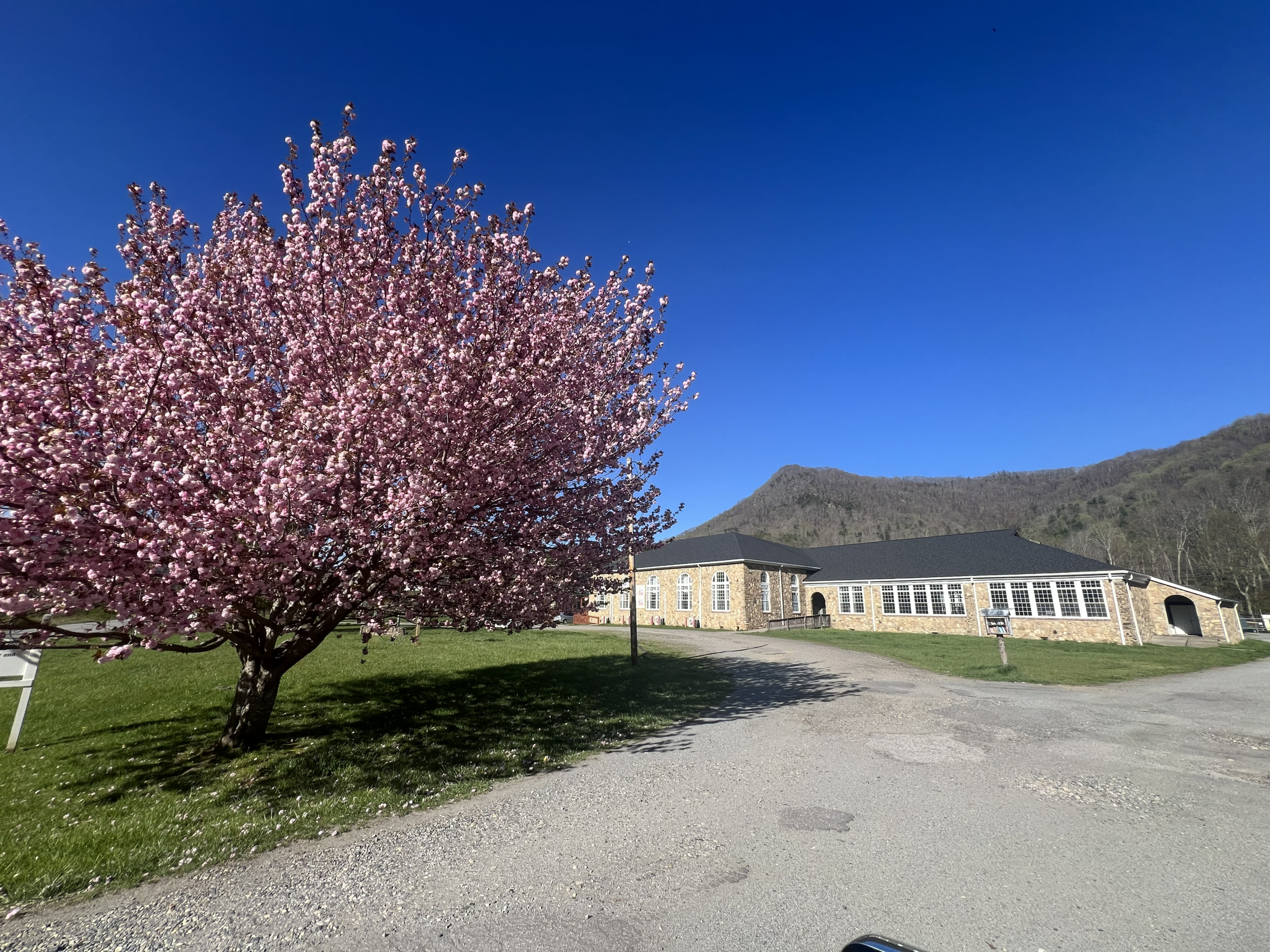
The misty Appalachians start to awaken by early March. Showy daffodils are blooming in abundance in unexpected places, and later in the month dogwood, redbud, and flowering fruit trees throw splashes of exuberant pinks and whites into the mix. A tradition my daughter and I love is “pink tree season.” As we go on our daily rounds, we look for all the shades of pink nature has to offer, marveling at the sheer volume of blossoms.
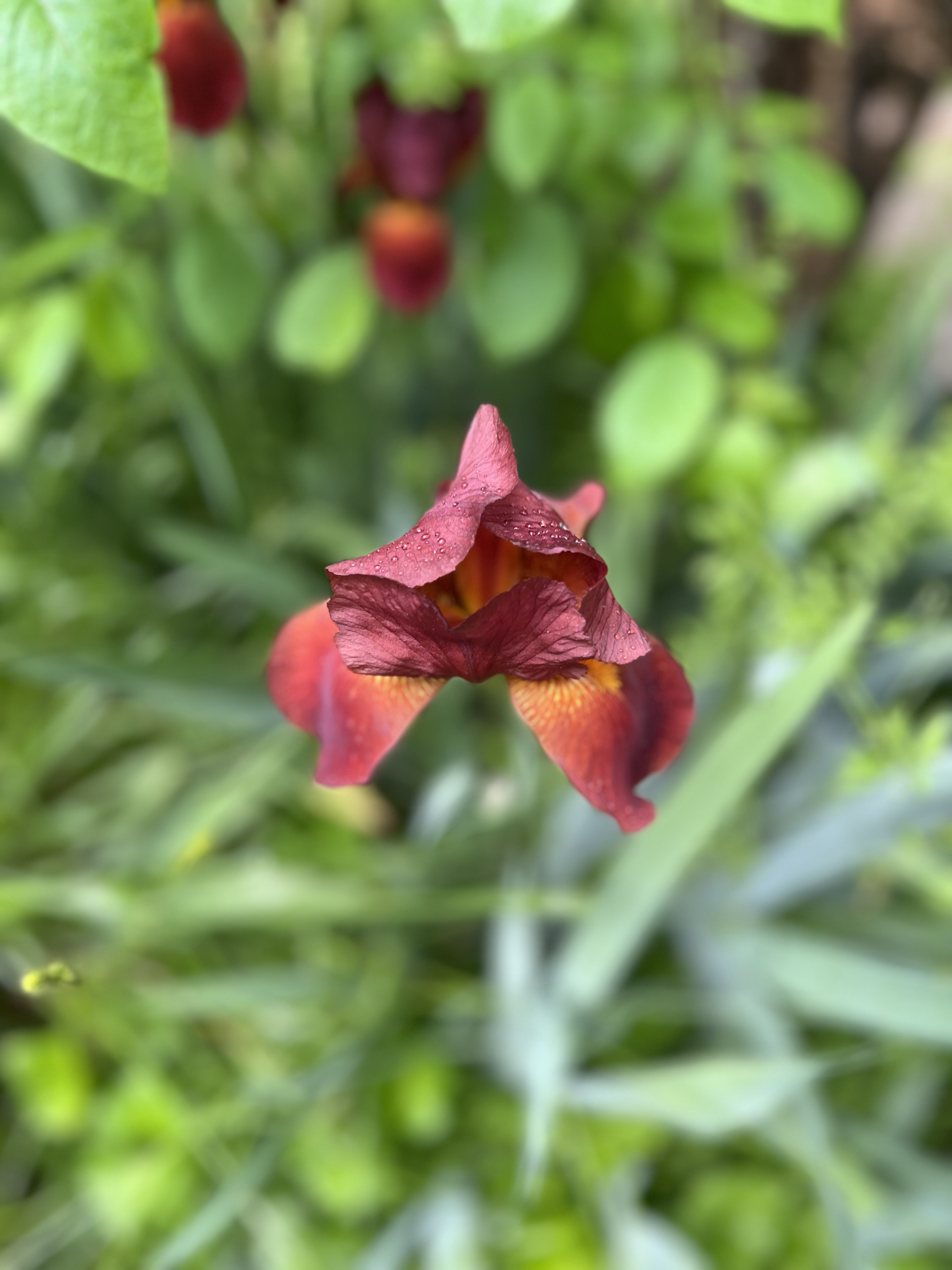
In the woods, the spring ephemerals come up fast so they can bloom before the trees leaf out and shade the forest floor. Bloodroot and spring beauty are among the first. Through April and into May, look along the Appalachian Trail and the paths of the Pisgah National Forest for trout lily, mayapple, violets, dwarf crested iris, jack in the pulpit, and trillium.
New leaves show up first in the lower, warmer elevations around town. Over the next few weeks the green climbs the mountainsides until it reaches the mountaintops. Until the canopy fills in around May, the views from our trails stay wide open, which makes early spring a good time to hike higher and catch blooms the valley has already finished. Once everything is out, you can feel like you are driving through a green tunnel as you wind your way down NC 209.
Bees in the Azaleas, Laurel, and Rhododendron
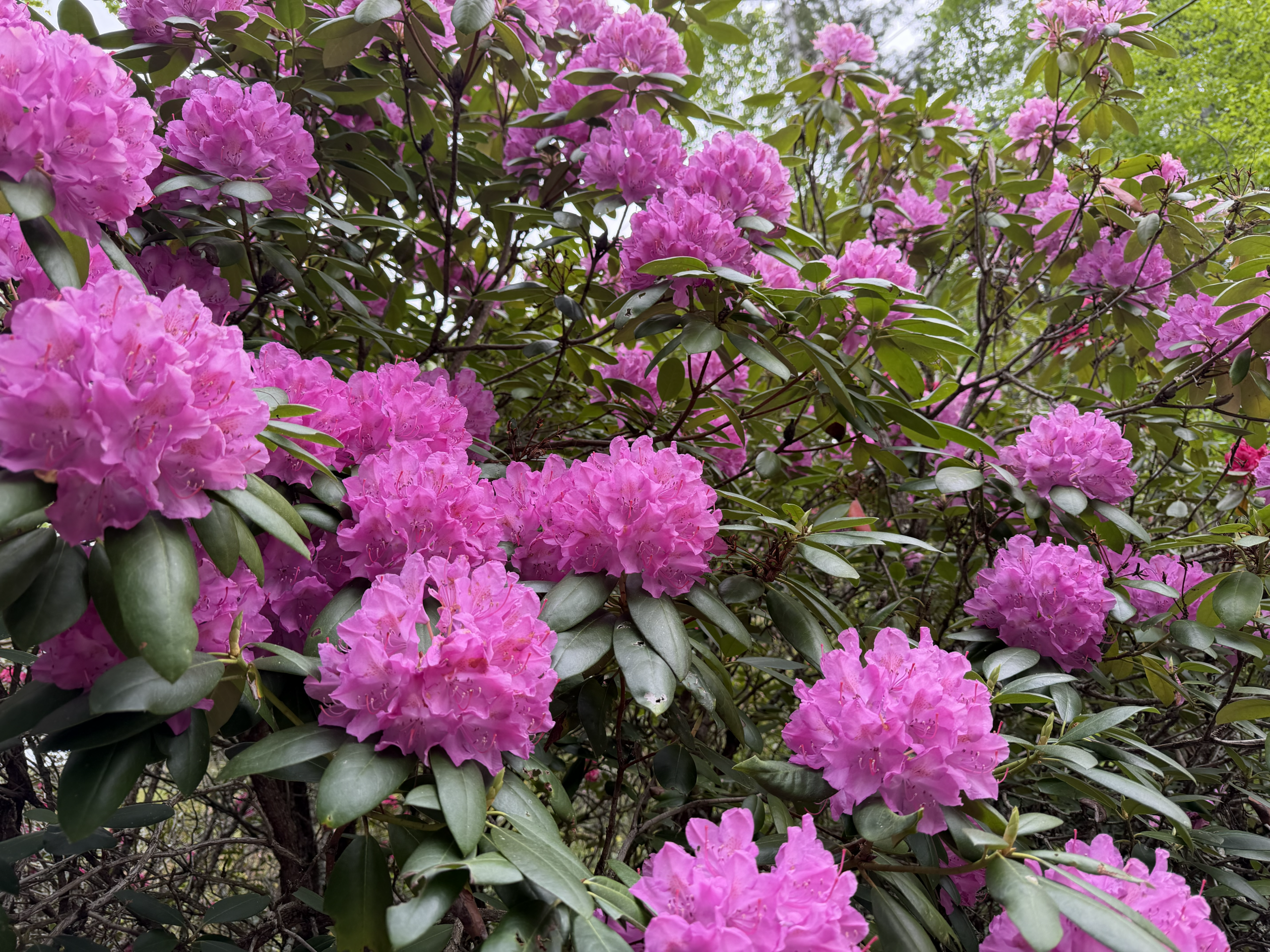
Flame azalea blooms from April into June depending on elevation, in shades from yellow to deep orange. Mountain laurel and rhododendron follow in late spring and early summer. Both are evergreen, so even in winter they keep the hillsides green alongside the pines and hemlocks. In the woods where laurel and rhododendron grow, look underneath for galax and, in spring, painted trillium. Keep an eye out for fire pink, too. Its narrow red tubes make it a favorite nectar plant of hummingbirds. If you quietly pause long enough, you might hear the distinct hum of the bees going about their work.
Bright Summer Meadows
In summer the color moves out into sunny meadows and roadsides. Bee balm, jewelweed, and black-eyed Susan bloom through midsummer, and goldenrod and white wood aster carry on into late summer and early fall. Max Patch, a famous bald on the Appalachian Trail, is covered in wildflowers during the warmer months, and its grassy summit sits at over 4,600 feet. The view is truly 360 degrees and worth the short hike to the summit.
Celebrations of Fall Color
Fall runs the spring pattern in reverse. Color starts on the high peaks and works its way down to the river valley. Dogwoods are often the first to turn, going red as early as mid September, and peak color around Hot Springs usually arrives from mid to late October, with the show lasting into November. The reds, yellows, and oranges stand out against the evergreen rhododendron, laurel, and pine mixed in between. Fall is my favorite season here, when the golden light makes the bends in the road feel like a special occasion.
Protect Our Fragile and Rare Species
Madison County holds more plant diversity than most visitors expect. During the 2020 Madison County BioBlitz, residents and biologists documented more than 1,100 species in two weeks. The plant finds included the small spreading pogonia, a native orchid that is rare in North Carolina; moss phlox, which is critically imperiled in the state; and the first fen orchid on record in Madison County, a flower listed as endangered in North Carolina.
American ginseng grows in the Pisgah National Forest as well. Generations of overharvesting made it a protected species, and the Forest Service has paused ginseng harvesting in the Pisgah and Nantahala National Forests in recent years because wild populations are too low to support it. If you spot one, enjoy it and leave it where it is.
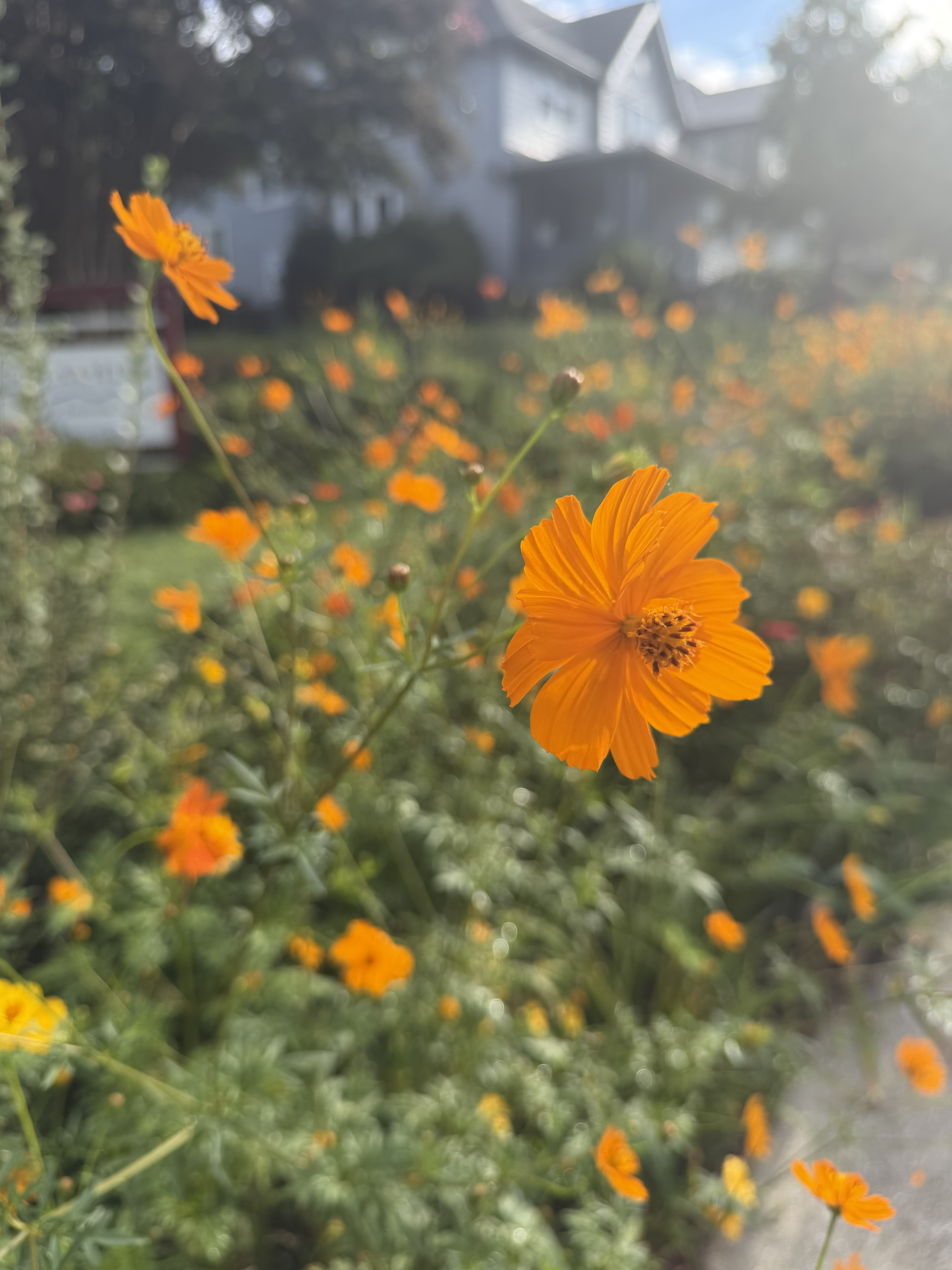
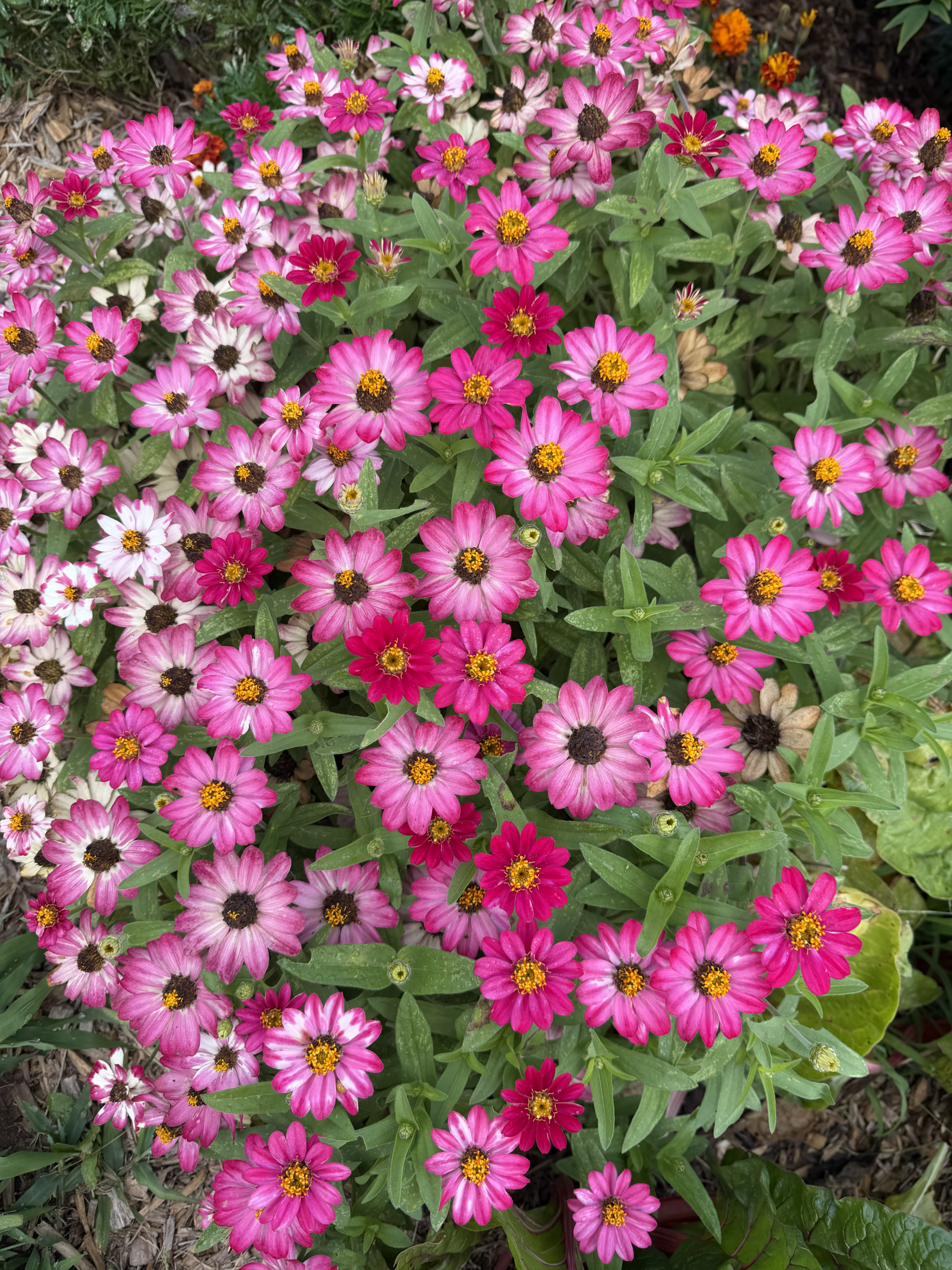
Where to See Wildflowers Near Hot Springs
- The Spring Creek Nature Trail, known for an abundance of wildflowers, including several kinds of trillium.
- The Laurel River Trail, an easy 3.6 mile walk along an old railroad bed, especially pretty in early spring when wildflowers bloom along the path and riverbanks.
- The Lover’s Leap Trail and Appalachian Trail loop, 1.6 miles above the French Broad, for spring ephemerals and views over town before the leaves fill in.
- The Bluff Mountain Loop, for spring wildflower displays and long forest views.
- Max Patch, for summer wildflowers on the bald and wide fall color views.
- Right in town, where gardens start blooming with the first daffodils of early March.
Enjoying Plants Responsibly
- Take photos, not plants. Leave wildflowers as you find them.
- When you pass other hikers, step onto rock or another durable surface so trailside flowers do not get trampled.
- Leave ginseng and other protected plants where they grow. Harvesting on national forest land is regulated, and collecting plants to sell requires a permit.
- Check our Spring and Fall pages and the Events Calendar to time your visit for peak blooms or peak fall color.
- Bring a field guide or a plant identification app, and consider adding your sightings to community science projects like iNaturalist, as BioBlitz participants did.
From the first daffodils in March to the last asters in fall, there is usually something blooming in Hot Springs. Take your time on the trail and see what you find.
-Article by Anna Robas
Sources
- Hot Springs Tourism Association, Spring in the Mountains: https://www.hotspringsnc.org/spring/
- Hot Springs Tourism Association, Fall: https://www.hotspringsnc.org/fall/
- Hot Springs Tourism Association, Temperate Climate (seasons): https://www.hotspringsnc.org/seasons/
- Hot Springs Tourism Association, Hiking: https://www.hotspringsnc.org/hiking/
- Hot Springs Tourism Association, Madison County BioBlitz article: https://www.hotspringsnc.org/discovering-biodiversity-in-hot-springs-nc-with-the-2020-madison-county-bioblitz/
- MountainTrue, 2020 BioBlitz Documents over 1,100 Species: https://mountaintrue.org/?p=26645
- MountainTrue, Join Us For A Madison County wide BioBlitz (iNaturalist): https://mountaintrue.org/?p=25946
- Appalachian Trail Conservancy, Appalachian Trail Wildflowers: https://appalachiantrail.org/news-stories/appalachian-trail-wildflowers/
- Appalachian Trail Conservancy, Max Patch: https://appalachiantrail.org/hikes/max-patch/
- Explore Asheville, Max Patch Trail: https://exploreasheville.com/stories/post/max-patch-trail
- National Park Service, Blue Ridge Parkway Bloom Calendar: https://www.nps.gov/blri/learn/nature/upload/Bloom-Calendar25.pdf
- National Park Service, Blue Ridge Parkway Showy Blooms: https://www.nps.gov/blri/learn/nature/showy-blooms.htm
- NC Cooperative Extension, Buncombe County, Stewarding Protected Plants in Our Forests: https://buncombe.ces.ncsu.edu/stewarding-protected-plants-in-our-forests
- The Mountaineer, Pause on ginseng harvesting continues in Pisgah, Nantahala national forests: https://www.themountaineer.com/outdoors/pause-on-ginseng-harvesting-continues-in-pisgah-nantahala-national-forests/article_ab26f0fc-662a-11ef-8e2a-f7fab4d8e74b.html
- Sierra Club North Carolina, Hike on the Laurel River Trail: https://www.sierraclub.org/north-carolina/wnc/blog/2025/05/hike-laurel-river-trail-may-15
- Wikipedia, North Carolina Highway 209: https://en.wikipedia.org/wiki/North_Carolina_Highway_209
- USDA Forest Service, Appalachian Ranger District Hurricane Helene closures: https://fs.usda.gov/r08/northcarolina/alerts/appalachian-ranger-district-hurricane-helene-updated-closures